 Back
Back


×


 Use this button to Sign In a OceanSpin partner account.

Use this button to Sign In a Jungliwin partner account.

Use this button to create OceanSpin a partner account.
Use this button to create Jungliwin a partner account.
 27 APRIL 2026
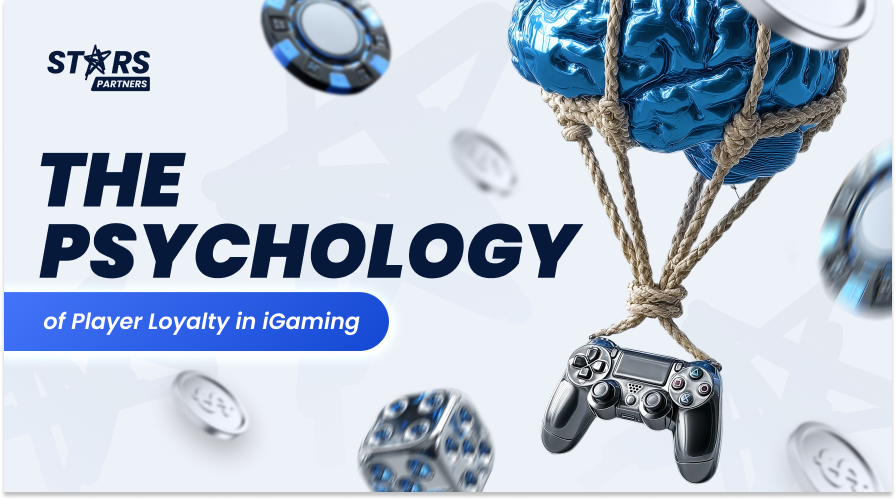
In iGaming, loyalty directly impacts revenue stability, lifetime value, and long-term scalability. Affiliates, CRM specialists, marketers, and product managers all operate within the same constraint: player behavior is dynamic, and retention depends on how consistently a product meets expectations across multiple sessions.
Player loyalty does not emerge from isolated wins or occasional engagement spikes. It develops through repeated interactions, emotional reinforcement, and a structured user experience that shapes habits over time.
A player can win and still not return. A player can lose and remain highly engaged. The difference lies in how the experience is structured.
Loyalty in iGaming is a combination of:
When these elements align, the product becomes part of a routine rather than a one-time interaction. Wins influence short-term satisfaction. Experience defines long-term behavior.
Well-documented psychological mechanisms influence player behavior. These triggers shape how often users return, how long they stay active, and how they perceive value.
1. Variable reward loops
Unpredictable outcomes create anticipation. This mechanism keeps users engaged across multiple sessions, especially when reinforced with near-miss scenarios or partial wins.
2. Progression systems
Levels, missions, and achievement mechanics create a sense of movement. Players return to complete unfinished sequences and maintain continuity.
3. Loss recovery patterns
After a loss, players often seek to restore balance. This behavior increases session frequency when supported by structured re-engagement triggers.
4. Social validation
Leaderboards, shared achievements, and visible status indicators increase emotional investment and perceived status within the ecosystem.
5. Familiarity and routine
Repeated interactions with the same interface, flows, and mechanics reduce cognitive friction. Over time, this builds habit-based engagement.
Habits form through repetition. In iGaming, UX defines how smooth and predictable each interaction feels.
When navigation is intuitive, loading times are minimal, and core actions are clear, players move through sessions without interruption. This continuity strengthens behavioral patterns.
Micro-interactions also play a role:
Each interaction reinforces the loop: action -> feedback -> continuation. Over time, this loop becomes automatic.
Bonuses increase activity within a limited time frame. They trigger deposits, boost short-term engagement, and support acquisition campaigns.
Long-term retention requires more than incentives.
When the experience lacks depth, players disengage after using a bonus. When the experience supports continuity, bonuses act as accelerators rather than primary drivers.
Retention strengthens when the player:
Bonuses contribute to engagement. Experience sustains it.
Personalization aligns the product with individual behavior patterns. It increases relevance across communication, offers, and in-product interactions.
Effective personalization operates across multiple layers:
When teams implement personalization correctly, players perceive the product as responsive and relevant. This perception increases return frequency and session depth.
Teams make loyalty predictable when they design it as a system instead of relying on isolated tactics.
A structured retention approach includes:
This approach aligns product, CRM, and marketing into a single retention framework.
Retention performance improves when teams focus on the full player experience:
Player loyalty in iGaming develops through experience, relies on psychological triggers, and follows a structured UX. Emotional engagement, habit formation, and personalized interaction define long-term retention.
Teams that prioritize experience build a more stable and predictable user base. Promotions and bonuses support engagement, while product depth and behavioral alignment sustain it.
Focusing on experience, personalization, and behavioral mechanics creates a foundation for consistent retention and long-term growth.