Back
Back





What types of traffic do you work?
How did you find out about us?



 Use this button to Sign In a OceanSpin partner account.

Use this button to Sign In a Jungliwin partner account.

Use this button to create OceanSpin a partner account.
Use this button to create Jungliwin a partner account.
 31 OCT 2025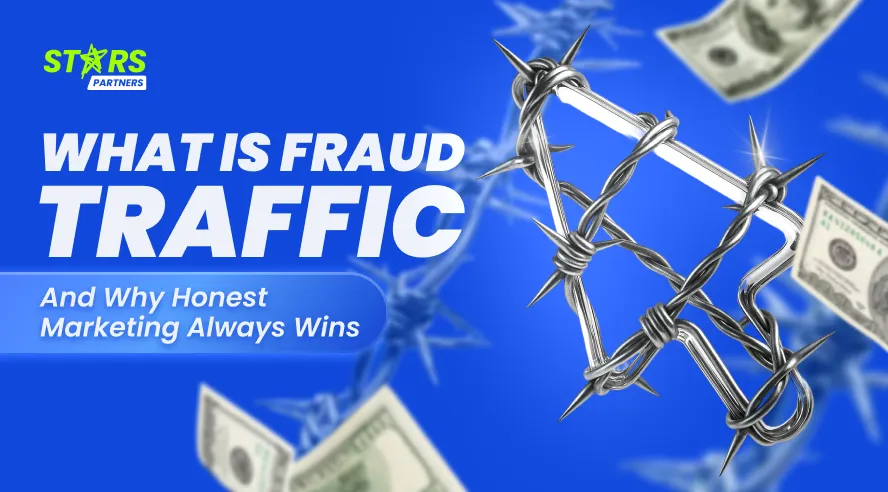
Fraud (or scam) traffic is any activity that creates the illusion of real user engagement. In affiliate
marketing, it often appears as clicks, sign-ups, or deposits driven by bots, fake users, or incentivized
actions rather than genuine interest. Such traffic may temporarily boost numbers, but it delivers no real
value to brands and ultimately harms everyone involved.
The most common forms of fraud are:
These tactics drain marketing budgets, distort analytics, and break the trust between advertisers and
affiliates.
Fighting traffic fraud is not just about protecting campaigns — it’s about protecting the reputation and
integrity of the entire affiliate ecosystem. When brands lose confidence in traffic quality, they cut
budgets, tighten rules, and slow down growth opportunities for honest partners.
That’s why honest marketing is the foundation of long-term growth. True partners focus on transparency,
verified data, and authentic engagement. They build sustainable funnels where every click represents a real
user — not a bot. Because in the end, trust and quality consistently outperform shortcuts. The more
transparent the industry becomes, the stronger the partnerships — and the faster the entire market grows.
Scam traffic — also called fraud traffic — refers to artificially generated or manipulated traffic sources
that don’t bring real users or conversions. Instead of driving genuine engagement, these sources create fake
activity through bots, scripts, or deceptive methods that mimic real user behavior.
The numbers may look impressive — high clicks, sign-ups, or installs — but this traffic provides no real
value. It wastes ad budgets, distorts data, and damages trust between brands and affiliates.
Bot traffic remains the most widespread form of scam activity. Fraudsters use automated scripts to create
fake clicks, registrations, or even deposits. Two decades ago, such bots were primitive and easy to spot,
but modern fraud systems are far more advanced. They can bypass basic verification methods such as CAPTCHA
or email confirmation, mimicking human behavior at a superficial level.
However, behavioral analytics quickly exposes them. Real users explore sites, scroll pages, and return later.
Bots, on the other hand, complete one or two actions and disappear. This is why advertisers implement
holding periods (holds) of 10-30 days to analyze traffic quality. When thousands of “users” sign up but only
a few convert, moderators easily detect anomalies. Once systems flag suspicious activity, networks cancel
payouts and revoke affiliate credibility.
Advertisers suffer the most from bot-based traffic, facing inflated acquisition costs and misleading
analytics. Fortunately, consistent monitoring and post-conversion tracking make this type of scam relatively
easy to uncover today.
Motivated traffic is another subtle form of fraud. Here, users complete specific actions — such as
registration or app installation — not out of genuine interest, but in exchange for payment or bonuses.
Scammers often disguise these actions as organic conversions to deceive advertisers.
This type of traffic appears legitimate at first. Users come from real devices and complete valid actions.
But a deeper analysis shows that they rarely engage with the brand afterward: they don’t make deposits, use
the app, or respond to emails. Paid motivation systems, “earn-per-signup” communities, or giveaway campaigns
often generate this behavior.
While not as apparent as bot traffic, motivated users damage conversion quality and long-term ROI. Brands end
up paying for leads that never become customers. A more extended hold period and behavior-based analytics are
key to identifying this kind of fraud.
Other frequent tactics include click fraud — when scripts or click farms repeatedly tap on ads to drain
budgets — and tracking substitution, where fraudsters manipulate tracking IDs or cookies to steal credit for
conversions they didn’t generate. Some even rely on VPN or proxy services to mask their location and simulate
activity from different countries.
These schemes can be technically complex and more challenging to spot, especially when mixed with real user
traffic. But advertisers can minimize risks through advanced anti-fraud tools, unique device fingerprinting,
and real-time traffic validation.
In essence, scam traffic evolves — but so do protection methods. Brands that prioritize transparency,
verification, and behavioral data will always outlast those chasing vanity metrics. Real growth starts with
real users.
Scam traffic is more than just a technical nuisance — it’s a systemic threat that undermines the foundation
of affiliate and performance marketing. It corrupts data, inflates budgets, damages reputations, and erodes
trust. Below are the four main dangers every partner and brand should understand — and actively protect
against.
Reputation is the most valuable currency in affiliate marketing. When a partner delivers fake traffic —
whether intentionally or unknowingly — it immediately raises red flags among advertisers and networks. Once
flagged for fraudulent activity, even one incident can put a long-term stain on a partner’s record.
For brands, the effect is equally damaging. When fake users flood campaigns, real audiences notice. They see
inconsistent engagement, fake reviews, or suspicious activity — and credibility drops.
In iGaming and other high-scrutiny industries, such exposure can lead to stricter compliance checks and
brand distrust. Rebuilding reputation takes months, sometimes years, and often costs far more than the
short-term profit gained from questionable traffic.
Fake clicks and bot-generated leads waste budgets faster than almost anything else in marketing. Advertisers
end up paying for actions that never lead to real conversions — installs that don’t engage, sign-ups that
never deposit, and sessions that end seconds after they begin. The problem compounds: distorted analytics
mislead optimization algorithms, leading them to allocate more budget to low-quality sources.
A campaign flooded with fraud traffic might show excellent CTR but terrible ROI. Over time, this skews
cost-per-acquisition metrics, leading marketers to make poor decisions based on unreliable data. Scam
traffic wastes not only money but also valuable learning opportunities. Every dollar lost to bots is a data
point lost for future growth.
Affiliate programs and ad networks have zero tolerance for fraud. Once tracking systems detect suspicious
patterns — such as abnormal conversion rates, identical IPs, or coordinated click spikes — the response is
immediate. Networks can ban accounts, freeze balances, and withhold all pending payments.
Motivated traffic, cloaking, or bot-driven conversions often trigger complete compliance investigations. In
some cases, networks even share blacklists across platforms, meaning one fraudulent campaign can destroy
access to multiple offers. Beyond lost earnings, some partners face legal liability or chargebacks for
violating terms of service. Simply put, scam traffic isn’t just unethical — it’s a fast track to losing your
business.
Affiliate marketing thrives on mutual trust: advertisers rely on affiliates to deliver quality, and
affiliates trust advertisers to pay fairly. Scam traffic breaks this equilibrium.
When fraudulent activity appears, even honest affiliates come under suspicion. Networks respond by tightening
verification rules, extending hold periods, or reducing payout percentages across the board.
This atmosphere of distrust slows down cooperation and makes scaling difficult. Instead of focusing on
innovation, both sides spend time on audits and compliance checks. In the long run, everyone loses — because
where trust declines, growth stalls.
Scam traffic doesn’t just steal money — it steals opportunity. Protecting data integrity, reputation, and
trust isn’t optional anymore. It’s the only way to build sustainable success in affiliate marketing.
 Partners
We buy all the traffic!
+ €50
*When KPI targets are met
No Cap
Unlimited Capacity
Higher Payouts
Earn More
Stable Payment Solutions
Reliable. Secure. Always.
Get 10%
For referring a friend